If you want to learn How to paint Cityscapes than watch my first Demonstration and subscribe my YouTube channel.
I am in the process of making new videos and will keep uploading for you.

Art Canvas Factory is a leading manufacturer of new age artist canvases, as well as the originator of their patented canvas stretcher design!
Why must your art talent suffer because of low grade and quality canvas mounts?
www.artcanvasfactory.com
Showing posts with label art style. Show all posts
Showing posts with label art style. Show all posts
Thursday, April 2, 2020

Monday, February 17, 2020
5 Popular Painting Styles: By Mayra A
5 Essential Painting styles to know and learn in order to effectively communicate and understand terms in the art world.
Baroque:
The Baroque style of painting originated in Rome and generally has a religious theme or is centralized around court life. Baroque paintings can be characterized by the abundance of details within the paintings as well as a sense of grandeur. Like the painting style, the word Baroque has come to mean something elaborate, including many small details.
Popular Baroque Painters Include:
Anthony Van Dyck
Paul Rubens
Vermeer
Claude Lorrain
Baciaccia
Agostino Carracci
 Photo Credit
Cubism:
Cubism became a popular style of painting in the early 20th century. The cubist style of painting is abstract, where one can visualize the theme of the painting, but the objects are broken up and re-assembled into un-life like representations. With cubism, the artist attempts to show the viewer the subject from a multitude of viewpoints.
Cubism is often associated with Pablo Picasso paintings, one of the innovators of this style of painting. Another famous cubist artist is Georges Braque.
 Photo: Credit
Expressionism:
The expressionist movement originated in Germany around 1905. Unlike the popular Impressionism painting style, expressionism attempts to provide the viewer with the painters view and opinion of the world and the subjects. This creates an image that is the artists own interpretation of the situation, often distorting reality and providing more of an emotional effect to the viewers. The Expressionist movement is known for paintings that represent and express intense emotion or angst.
Popular Expressionistic Artists include:
Vincent Van Gough
Edvard Munch
Salvador Dali
Henri Matisse
 Photo: Credit
Impressionism: The impressionist art movement began around the 19th century in Paris. Impressionist style emphasizes the fine details of every day objects including how light, colors, and the passage of time can affect the subject. This style generally concentrates on visible brushstrokes, light colors, primary colors and small brushstrokes.
Popular Impressionistic Artists Include:
Edgar Degas
Claude Monet
Pierre Auguste Renoir
 Photo: Credit
Minimalist: The minimalist style of painting originated in America and has been subject to much criticism since its inception. The style of painting includes minimal details, the details that are included are often represented by precise, hard brushstrokes and often include geometric forms. The color palette of these styles generally include a limited amount of unmixed, primary colors. The style of painting represents something that is spare and has been stripped to its most basic forms.
Popular Minimalist Artists Include:
Frank Stella
Ad Reinhardt
Robert Morris
 Photo: Credit
The world of art and paintings is endless, and learning about its history, styles techniques and other useful information about painting is an ongoing task.
Want to learn more? Visit TheHelpIsHere.com [http://www.thehelpishere.com]
which offers thousands of useful help and how to articles on a variety of topics. All content is free to access, including our coupons and deals section, reviews, articles, and freebies area.
Article Source: https://EzineArticles.com/expert/Mayra_A/170644
Article Source: http://EzineArticles.com/2148593
Baroque:
The Baroque style of painting originated in Rome and generally has a religious theme or is centralized around court life. Baroque paintings can be characterized by the abundance of details within the paintings as well as a sense of grandeur. Like the painting style, the word Baroque has come to mean something elaborate, including many small details.
Popular Baroque Painters Include:
Anthony Van Dyck
Paul Rubens
Vermeer
Claude Lorrain
Baciaccia
Agostino Carracci


Cubism:
Cubism became a popular style of painting in the early 20th century. The cubist style of painting is abstract, where one can visualize the theme of the painting, but the objects are broken up and re-assembled into un-life like representations. With cubism, the artist attempts to show the viewer the subject from a multitude of viewpoints.
Cubism is often associated with Pablo Picasso paintings, one of the innovators of this style of painting. Another famous cubist artist is Georges Braque.


Expressionism:
The expressionist movement originated in Germany around 1905. Unlike the popular Impressionism painting style, expressionism attempts to provide the viewer with the painters view and opinion of the world and the subjects. This creates an image that is the artists own interpretation of the situation, often distorting reality and providing more of an emotional effect to the viewers. The Expressionist movement is known for paintings that represent and express intense emotion or angst.
Popular Expressionistic Artists include:
Vincent Van Gough
Edvard Munch
Salvador Dali
Henri Matisse

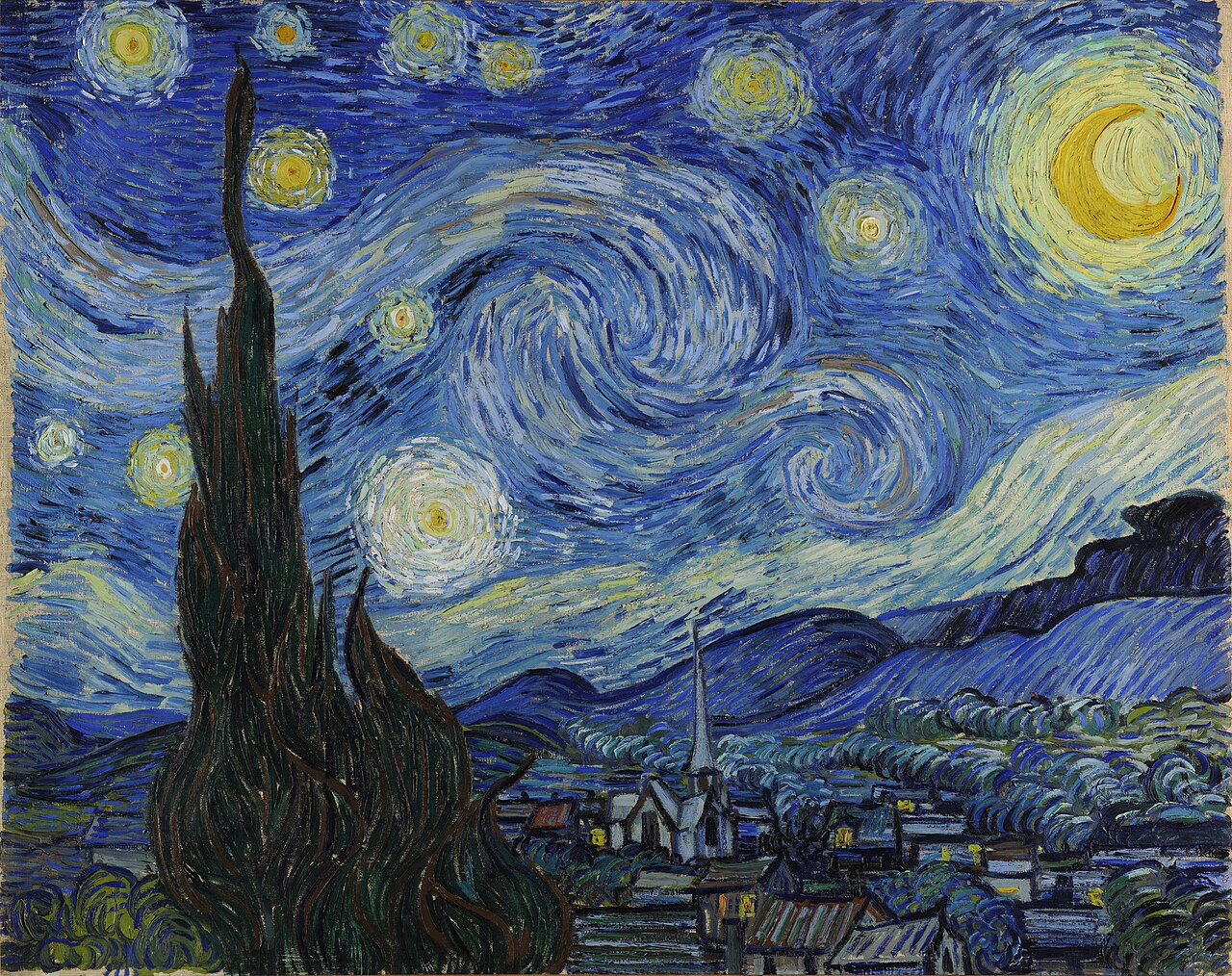
Impressionism: The impressionist art movement began around the 19th century in Paris. Impressionist style emphasizes the fine details of every day objects including how light, colors, and the passage of time can affect the subject. This style generally concentrates on visible brushstrokes, light colors, primary colors and small brushstrokes.
Popular Impressionistic Artists Include:
Edgar Degas
Claude Monet
Pierre Auguste Renoir


Minimalist: The minimalist style of painting originated in America and has been subject to much criticism since its inception. The style of painting includes minimal details, the details that are included are often represented by precise, hard brushstrokes and often include geometric forms. The color palette of these styles generally include a limited amount of unmixed, primary colors. The style of painting represents something that is spare and has been stripped to its most basic forms.
Popular Minimalist Artists Include:
Frank Stella
Ad Reinhardt
Robert Morris


The world of art and paintings is endless, and learning about its history, styles techniques and other useful information about painting is an ongoing task.
Want to learn more? Visit TheHelpIsHere.com [http://www.thehelpishere.com]
which offers thousands of useful help and how to articles on a variety of topics. All content is free to access, including our coupons and deals section, reviews, articles, and freebies area.
Article Source: https://EzineArticles.com/expert/Mayra_A/170644
Article Source: http://EzineArticles.com/2148593
Friday, February 14, 2020
Experts Conclude That This Odd Self-Portrait of Vincent van Gogh Giving the Side Eye Really Is by the Dutch Master
Leading experts on Vincent van Gogh have concluded that a strange portrait belonging to a Norwegian museum is actually an authentic work by the Dutch master. Extensive research conducted by the Van Gogh Museum in Amsterdam has shown that the artist executed the unusual self-portrait while he was suffering from psychosis.
The painting, from 1889, has been in the collection of Oslo’s Nasjonalmuseet since 1910, but its attribution to Van Gogh has been openly disputed since 1970. Over the years, some scholars took issue with crucial missing provenance details, while others deemed its style and dreary color palette out of key with the rest of the artist’s oeuvre.
While provenance research carried out at the Najonalmuseet in 2006 showed that the work had belonged to two friends of Van Gogh, Joseph and Marie Gioux, who lived in Arles, it was still unclear when the couple received the work. And, for a long time, experts couldn’t agree on a date of execution, or whether it was done in Arles, Saint-Rémy-de-Provence, or Auvers-sur-Oise.

In a bid to settle the matter once and for all, the museum invited the experts in Amsterdam to study the portrait in 2014. Now, after comprehensive inspection of its style, technique, material, and provenance, researchers have concluded that it is “unmistakeably” by Van Gogh’s hand.
The work turns out to be the only one that can be tied to a letter Van Gogh wrote to his brother Theo on September 20, 1889. What’s more, the letter proves that the work is actually a significant one, executed while the artist was having his first major psychotic episode at an asylum in Saint-Rémy. In his letter, Van Gogh describes it as “an attempt from when I was ill.” It is the only known work painted by the artist when he was in the throes of psychosis.
“Although Van Gogh was frightened to admit at that point that he was in a similar state to his fellow residents at the asylum, he probably painted this portrait to reconcile himself with what he saw in the mirror: a person he did not wish to be, yet was,” Louis van Tilborgh, a senior researcher at the Van Gogh Museum and an art historian at the University of Amsterdam, says in a statement. “This is part of what makes the painting so remarkable and even therapeutic.”
In mid-July of that year, Van Gogh entered a state of psychosis that lasted until September. At the end of the summer, in a letter dated August 22, he wrote that he was still “disturbed” but was well enough to experiment with painting again. This led experts to conclude that the work was done after August 22 but before September, and it therefore predates both of his famous 1889 self portraits in Washington’s National Gallery of Art and the Musée d’Orsay in Paris.
The work shows Van Gogh looking defeated, head slightly bowed and gazing sideways at the viewer with a lifeless expression. While the brownish-green pigments and somber palette seemed unusual for the artist who is known for his bright blues and yellows, the palette and brushwork are actually consistent with other works dating from the summer and autumn of 1889, which make sense within the context of the work’s execution.
The work is currently on view on the third floor of the Van Gogh Museum, and will be included in the museum’s upcoming exhibition of artists’s portraits, “In the Picture,” beginning February 21. After the exhibition closes in May, the work will return to Oslo where the Nasjonalmuseet is slated to reopen after renovations in 2021.
Original Article: Here
Saturday, February 8, 2020
Friday, February 7, 2020
Women with Tattoos of Fine Art Masterpieces Are Actually Oil Paintings Themselves
Since we last checked in with painter Agnieszka Nienartowicz, she has continued to hone her skills and produce stunning oil paintings. Inspired by the world of Old Master art, her canvases typically incorporate motifs from well-known artists like Caravaggio, Hokusai, and Sandro Botticelli. Popping up as contemporary tattoos on the skin of the women she portrays, they are a wonderful tribute to the past that also looks toward the future.


One is initially drawn into Nienartowicz’s work due to her technical skill. Bordering on hyperrealism, her paintings have barely a brushstroke that’s visible to the naked eye. Each woman is portrayed with incredible accuracy and detail. It’s only when drinking in these visuals that the historical details begin to reveal themselves. Whether it’s John James Aubudon’s Birds of America peeking from beneath the shirt of a woman with her back turned to the canvas or Guido Reni’s depiction of Jesus and Mary as sleeve tattoos on a downtrodden girl, each classic painting informs the significance of the artwork.
Particularly meaningful to Nienartowicz is her Girl in White triptych. Over the course of three canvases, we see the same girl in different stages of undress and as she slowly unzips her dress, a spectacular surprise awaits. The Last Judgement by Hans Memling, a masterful 15th-century triptych, covers nearly her entire torso. The paintings are deeply personal for the artist, as they are partially an expression of her experience as a Polish emigrant.


Reflecting on the difficult past of her ancestors and how this has informed her outlook on life, she writes about her initial impressions of Americans and how different their attitudes were in comparison to what she was used to. “I remember my surprise after the first contact with these people—how much joy, openness, and positive attitudes towards the world is in them,” she recalls. “I think that there is a sadness in me that transferred from the blood of previous generations, who experienced suffering. I think many of us Poles are—often without even knowing it—deeply scarred by hard history; the stigmas of unfulfilled dreams, traces of surgery on aching souls, disfigurement after difficult choices, and wounds of tragic events. These scars are the tattoos of survival.”
Still early in her career, it’s thrilling to see Nienartowicz’s art grow and progress. As she continues to develop her craft and find her voice, we’ll be anxiously waiting to see what’s next.
Original Article: Here
Wednesday, February 5, 2020
Monday, February 3, 2020
Oil Painter - Few Amazing Tips to Become Good Oil Painter: By Murtaza Habib
Oil paint contains a unique process and an artist has to understand it properly, if he wants to create a better painting. The purpose of this article is to make sure that you learn the basic process of oil painting and create beautiful painting. The basic law of oil painting is to find out the technique that suits your style and personality.
It's important that you learn the language and laws of oil painting as under, if you are new to this painting style.
1. This paint is wet.
2. This painting style is done using brushes.
3. It is different as compared to other painting media you have been using.
You have to think like an oil painter to create good oil paintings. Accept the fact that the oil painter looks at the world differently as compared to other people. Don't focus on the subject that is given to you for painting.
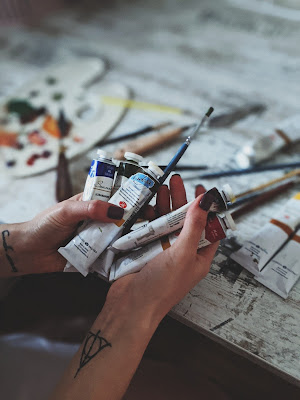
Keep the oil paint in your mind and treat the subject like the process only. Clear the process in your mind and apply the action using your brush. When you gain this thinking style, you can create any kind of painting no matter what the subject is. Don't take this point lightly, because I have told you the secret that I have never told anyone as yet. You should have your own unique style to see the world.
Capture the new ideas and make a note if possible. Always be confident about your success while creating the painting. Choose the right method that suits your style and keep going on. Don't confuse yourself by asking many questions regarding the selection of surface, brush and other stuff. You just need to keep remember all the procedure required to create the painting.
If possible then read the oil painting books and gain deep knowledge regarding this painting style.
Learn from todays expert how to paint and draw step by step with the help of pictures on your core subject whether it is oil, watercolor, acrylic, fabric painting, pencil, cartoon drawing, or digital art.
Explore your creativity with these 1750 tutorials - Painting and Drawing lessons [http://www.paintonmycanvas.com/ezine.html]
'Murtaza Habib' has helped hundreds of newbies to start their painting courses, now you can do it too...
Article Source: Here
Photo: Valeriia
It's important that you learn the language and laws of oil painting as under, if you are new to this painting style.
1. This paint is wet.
2. This painting style is done using brushes.
3. It is different as compared to other painting media you have been using.
You have to think like an oil painter to create good oil paintings. Accept the fact that the oil painter looks at the world differently as compared to other people. Don't focus on the subject that is given to you for painting.

Keep the oil paint in your mind and treat the subject like the process only. Clear the process in your mind and apply the action using your brush. When you gain this thinking style, you can create any kind of painting no matter what the subject is. Don't take this point lightly, because I have told you the secret that I have never told anyone as yet. You should have your own unique style to see the world.
Capture the new ideas and make a note if possible. Always be confident about your success while creating the painting. Choose the right method that suits your style and keep going on. Don't confuse yourself by asking many questions regarding the selection of surface, brush and other stuff. You just need to keep remember all the procedure required to create the painting.
If possible then read the oil painting books and gain deep knowledge regarding this painting style.
Learn from todays expert how to paint and draw step by step with the help of pictures on your core subject whether it is oil, watercolor, acrylic, fabric painting, pencil, cartoon drawing, or digital art.
Explore your creativity with these 1750 tutorials - Painting and Drawing lessons [http://www.paintonmycanvas.com/ezine.html]
'Murtaza Habib' has helped hundreds of newbies to start their painting courses, now you can do it too...
Article Source: Here
Photo: Valeriia
Saturday, February 1, 2020
Monday, January 27, 2020
Learning How to Use Your Paint Brush: By Amy Ressa
If you are a self taught artist, you may be missing out on basic techniques to use when you are doing your decorative painting. It is never too late to take the time to learn. Add this knowledge to your current skills and improve your finished products. Learning never stops and can help keep your work fresh and up to date with the times.

Strokework is the basis behind decorative painting. Once you have mastered the different strokes, you will be on the way to creating beautiful artwork. By learning these different techniques you will be able to do different types of decorative painting. Combining techniques will allow you to create more interest in your work. These strokes can be used on small projects like painting glassware, painting on furniture, or walls.
If you are a painter who did not learn how to use your brush and the different strokes from the beginning, you will notice the difference in your work if you take the time to learn. It allows you to understand how to hold your brush, the amount of pressure, and how the paint works in your brush. This is information that is beneficial no matter what type of painting you do.
There are two main elements to stroke work. One element is downward pressure and the other is sideways pressure. The amount of pressure will determine the width of your stroke. Of course, the more pressure you exert, the wider your stroke will be. As with the less pressure you use, the smaller your strokes will be.
My name is Amy Ressa. I am the owner of The Painted House and More. My business is located in Central Ohio. I am however always interested in working with others that are located throughout the United States and not limited to Central Ohio. I am a decorative painter who offers a service to paint items for weddings and special events. These items can include ring bearer pillows, flower girl baskets, cake and knife serving sets, plates, dessert or wedding cake plates, centerpieces, and more. I am open to any ideas you would like to discuss.
Article Source: Here
Catch Amy here
Photo: Dominika
Wednesday, January 15, 2020
Art Supplies - Buying and Cleaning Paint Brushes
Remember when you were in grade school and painting seemed so simple because your teacher just handed you art supplies and helped wash brushes afterwards? Approaching the medium as a more mature artist, you must learn about paintbrush materials and how to properly care for your brushes.

First, you must decide whether you will need soft or stiff hairs for your paintbrush. Either can be made of natural hairs or synthetic fibers. A thin paintbrush is ideal when you want to do detailed work or precise painting. It allows you to spread paint easily. Hard bristles on the other hand are better for manipulating thick paint. This allows you to create brush marks in the paint that can be seen on the canvas. Vincent van Gogh's work is famous for this technique, as evidenced by his painting The Starry Night.
Most purists will say that natural hair will always be superior to synthetic fiber because of its flexibility and strength. The hair for paintbrushes comes from animals including Sable, squirrel, hog, camel, ox, pony and goat. If the thought of using hair from one of these animals makes you squeamish or you have ideological problems with this, do not fear: modern synthetic brushes have come a long way and are even less expensive than their natural hair counterparts.
The next step is to learn a little bit about paintbrush anatomy. The handle is usually made of wood and is called the ferrule. This holds the hairs or bristles. The tip of the bristles is referred to as the toe.
When deciding which paintbrush to use it is important to know the size of the brush. This can be determined by looking at a number on the side of the handle. The smallest size is 00 followed by 0, 1, 2 and so on. If you are buying online it is important to see a picture of the brush you're purchasing. Two brushes sized the same can actually be very different because of the number of bristles and the width of the handle. This problem can be alleviated if you shop in an actual store or are already familiar with the brand of brush.
It takes a lot of time and money to get the right paintbrush, so it makes sense to take care of them, which includes proper cleaning after each use.
Before you get started, make sure you have mild soap (or turpentine if appropriate) and some tissue. You will also need lukewarm water and a place to dry your brushes.
Wipe off the excess paint using a soft cloth or tissue. Then, rinse your brushes in turpentine if you are using oils, but use lukewarm water if you're paint is water-based. Hot water can cause the hairs of your brush to fall out. Afterwards, gently wash your brushes with mild soap. Rinse and repeat as many times as necessary until no color comes out and your brush returns to its original color. Next rinse your paintbrush in clean water. Remember to shake off the excess water after this. If the brushes seem misshapen, use your fingers to gently bring the brush head back to its original shape.
Now you are ready to dry the paintbrushes. Wrap the bristles in tissue or toilet paper while they are wet. When the bristles dry they will contract in this way and will maintain their shape. Let the brushes dry at room temperature. Be sure not to rest them on their head because this is another potential hazard to maintaining appropriate shape.
Since some of these materials can be toxic protect your skin with a pair of gloves. These can be purchased at an art store or even at a drugstore or hardware store.
Anne Clarke writes numerous articles for Web sites on art supplies, fashion, and home decor. Her background also includes teaching, gardening, and parenting. For more of her useful articles on art supplies, please visit Art Supplies, home of helpful tips and information about art and art supplies.
Article Source: https://EzineArticles.com/expert/Anne_Clarke/33662
Monday, January 13, 2020
Learn How To Paint Watercolors Fast - Use Only 1 Color
Learning to paint fast is difficult. Some say it feels impossible...
But it doesn't have to be so hard...
Like all skills, whether in Arts, Crafts or any profession the trick is to remove complication. Watch any expert work and you will be amazed how quickly they make the impossible seem easy...
Think of a Blacksmith making horseshoes on his anvil...
He knows how to make the fire hot enough to make the metal soft without melting
He knows that every strike of his hammer will shape and mould the steel
He knows just how to trim the hoof to make the shoe fit
He never doubts his ability to give the horse he makes the shoes for exactly what is needed for comfort and wear
It is an honor to see a craftsman at work. It is a privilege to witness the accumulation of many years hands-on knowledge.
Learning to be an artist takes time. Learning to paint professionally can take many years...
The fastest way to learn to paint watercolors is to take it in small stages... starting simple and building painting skills with small steps.
The first step is to paint watercolor using 1 color... it can't get any simpler...

You learn how to thin watercolor paint with your brush
You learn how much water you need to get a certain tone of color
You learn how to use water to carry color pigment across your watercolor paper
You learn what can go wrong when you touch your wet paper with a brush full of color
You learn to expect surprises
You learn to want to encourage surprises by experimenting with new techniques
And, most importantly, you get the opportunity to learn to draw with your watercolor brush... You learn how to make your brush become your best friend.
When you use only 1 color to learn how to paint watercolors it is easy to concentrate...
You can quickly learn how to get color tone right
You soon learn that color will flood and spread across wet paper
You know that if an earlier wash is fully dry it will be spoiled if you let your next brush mark touch
You find yourself doing amazing things with watercolors fast because you don't have to worry about which colors you need to mix that favorite green, or the orange you saw in last night's sunset.
Learning how to paint watercolors using only 1 color helps you learn fast because you don't even need to worry about making mistakes...
It is quick and easy to do it again because you have kept it simple
You have perfected the basics of learning watercolor painting
Perfect the basics of watercolor painting and nothing can stop you from mastering the next stage... Learning How To Mix Colors.
Michael Dale is the author of 1- Color Is Best (the quick and easy way to learn to paint watercolor) and 3- Colors Are All You Need (mix any color you want fast using only 3 colors). Contact [http://www.Paint-And-Draw.com] to find out more.
Article Source: https://EzineArticles.com/expert/Michael_Dale/145082
Friday, December 20, 2019
Choosing The Right Brushes For Oil Painting
Paint brushes come in a variety of shapes, sizes, materials, and costs. Determining which one is right for you, and when it is the right one, depends largely on how you want to use it. The main types of brushes are china bristle, soft hair, and synthetic bristle.

China Bristle Brushes
China bristle brushes, also called hog bristle or Chungking bristle, are made from natural pig hair. They are tough, durable brushes, able to stand up to the oil while still cleaning up nicely. They can hold a lot of paint, making them ideal for alla prima painting or impasto.
Soft Hair Brushes
Soft hair brushes are made from Kolinsky sable or ox hair, or more rarely squirrel, pony, goat, mongoose or badger. Soft hair brushes are much softer than china bristles, and a lot more expensive. It's not unheard of to pay several hundred dollars for a large sable brush. But for more delicate work, like blending and glazing, soft hair brushes are indispensable.
Synthetic Bristle Brushes
For quality and affordability, you can't go wrong with synthetic bristle brushes. Though turpentine or thinners used in oil painting can destroy some types of synthetic brushes, recent innovations in synthetic bristle technology have produced solvent resistant brushes.
Be careful, though. While affordability is a legitimate consideration when choosing your brushes, don't let it be the main one. Those brushes in the multi-packs may look just as good as the others, at a fraction of the cost, but you will end up with brushes warped and falling apart in no time.
Brush Shapes
Paint brushes come in several shapes, each designed to apply the paint in specific ways. The most useful shapes you will use in oil painting, in no particular order, are:
Flat - Designed to spread paint quickly and evenly to an area.
Bright - Similar to a flat brush, but with short, stiff bristles. Great for impasto work.
Round - Long, closely arranged bristles used for drawing or detail work.
Filbert - These almond-shaped brushes offer good coverage and the ability to perform some detail work
Fan Brush - Used for blending broad areas and creating different textures.
Liner Brush - Used for lettering and fine detail work.
By no means do you have to use, or even have, all of these brushes. Experiment and find the shape that works for you.
Brush Sizes
Brushes are sized by numbers based on the width of the brush at the metal sleeve, or ferrule, which holds the bristles in place. The size of your painting surface will help determine the size of the brush you use. For example, a brush that is 2 inches wide will be used on a canvas that is at least two or three feet in either direction.
However, this is just a rule of thumb. As with brush shapes, the sizes you choose will ultimately be determined by personal preference. So go get some brushes and start painting.
To learn more, please visit me at [http://www.oilandpigment.blogspot.com] for a look at my own paintings and works in progress.
Article Source: https://EzineArticles.com/expert/Rob_Pitts/88587
Friday, November 29, 2019
Weekend Big Screen Feature: "The Secret of Drawing" Episode 3: "All In The Mind"
Every weekend we feature a full length art movie / Documentary! So grab the pop corn and enjoy!
Friday, November 22, 2019
Weekend Big Screen Feature: "The Secret of Drawing" Episode 2: "The Line of Enquiry"
Every weekend we feature a full length art movie / Documentary! So grab the popcorn and enjoy!
Friday, November 8, 2019
History of Oil Paintings
Oil Paintings are the stuffs of a certain time and certain set, and art history of course tries to place these works in their superior setting. Any body learning western art, for instance, would study to be familiar with the styles of the Oil painting reproduction, Baroque, traditional, idealistic and Modern periods, and to know the complex interaction of consideration, support, civilization and monetary issues, which the oil paintings represent. It is to such a sympathetic that art critics refer when they insist that art today has to be comprised with contemporary issues.

The history of oil painting goes back to very old times when man endeavored to detain his world and knowledge in paint. It was profound in the grottos of Southern Europe when man assorted animal fats with earth and stain to form what could be measured as the first oil paints. The paint was then altered onto the walls of the grotto, with the prehistoric images of the hunters and the animals sought after becoming the earliest creative creations of humankind.
The oil painting medium developed when during the time of 15th century, Jan van Eyck the well known Belgian painter found that linseed oil and oil from nuts can be mixed with different colors to generate dazzling oil colors. Though there is proof that some English artists from the 13th Century made use of oils, van Eyck leftovers the discoverer and first advocate of oil painting technique, as we know it these days. In modern times, oil painting color is one of the most in style choices of appearance by artists globally, as it offers enormous variety & methods, strong depth of color vitality and durability that allow paintings to last thousands of years.
It is as well one of the most lenient mediums - the paint could be simply directed on the canvas and if you make a error you could always clean the color off the canvas (only with a cloth dipped in turpentine), due to the length of ventilation time. The amazing flexibility of oil color provides itself completely to the customary painting techniques of joining together and glazing, impasto and scumbling on a huge number of surfaces, giving the artist excellent results. These days oil painting reproduction is gaining more and more popularity.
Vijay is a Copywriter of Art reproductions He written many articles in various topics. For more information visit: Oil painting contact him at 1artclubpainting@gmail.com
Article Source: https://EzineArticles.com/expert/Vijay_Kanth/42438
Friday, October 25, 2019
Popular Painting Styles
In painting world there are so many styles that are very popular. But before giving an account of different popular styles we need to know what the term "style" means. In fact, there is not any certain definition of "style". It may be understood in the aesthetic terms as what to paint or which physical technique implied in painting. Aesthetic movements like realism, romanticism and impressionism belong to this explanation of style. To further understand it, we may say that style is said to be the ways an artist paints and applies colors and texture. The perspective and the way in which an artist looks at the things visible and invisible characterize his or her style.

Scholarly discourse on style has given more technical term "movement" or "school" to which an artist can be associated with. Inclusion of an artist to certain school or movement may be done by the deliberate affiliation of the artist to such movement or by the art historians.
Some of the popular painting styles are discussed under following heads:
Constructivism: This movement had started in Russia in the wake of socialism. It was not purely an art but was a fusion of art and architecture. This movement was principal inspiration in raising many socialist establishments in Russia after the October revolution. Constructivism was on high in the period between 1919 to 1934. The chief proponents of this style of art were Alexander Rodcheckno, Liubov Popava, Vladimir Tatlin and Olga rozanova.
Fauvism: This is painting style in which proponents believed in the use of color as a massive emotional force. This style was marked by expression of feelings in colors with severe roughness and clumsiness. The use of simplified lines to expressively reveal the subject and theme of the painting was also used to be the attempt of the artists. They preferred spontaneity and freshness over the finish in any work of art. Pioneer of this art style was Gustave Moreau.
Classicism: This term refers to the paintings style employed by the ancient Roman and Greek painters. Classicism is characterized by the simplicity and adherence to the basic rules and principles. This art style is refined and elegant, disciplined by order and symmetry. Classicism is unique style which does not encourage self expression and individuality. Michelangelo, Leonardo da Vinci, Raphael and Mantegna were the painters who tried to imitate this ancient style of art.
Besides, there are so many other styles and schools which are significant and have expressed different thoughts and subjects of the self and society in a unique way. Noteworthy of them are- abstract art, aboriginal art, aestheticism, art brut, art nouveau, baroque, Byzantine art, cubism, dada, dragging, encaustic, paintings, expressionism, gothic, impressionism, mannerism, marbling, minimalism, modernism, neoclassicism, orientalism, primitivism, ragging & stippling, realism, spattering, surrealism, symbolism, theorem paintings and wood graining.
Rajneesh Dubey is Content Coordinator for http://ethnicpaintings.com
This website gives you comprehensive informations on painting history, development, trends, popular painting styles, great painters, famous paintings, painting galleries and museums, painting tips, painting classes. In other words, this website is a treat to painting freaks.
To have more comprehensive idea about Popular Painting Styles please visit Ethnic Paintings
Article Source: https://EzineArticles.com/expert/Rajneesh_Dubey/126170
Saturday, October 19, 2019
Subscribe to:
Posts (Atom)